Choosing the appropriate Fuel Pump for the huge GMC Yukon XL is related to power performance, fuel efficiency and long-term reliability, and it is necessary to precisely match the engine requirements with the original vehicle specifications. Take typical models equipped with 5.3L V8 or 6.2L V8 engines as an example. The output pressure range of the original fuel pump recommended by the manufacturer is usually between 380 and 450 kPa (about 55 and 65 psi). The flow rate must meet the peak demand of at least 255 liters per hour (approximately 67 GPH) under high load, ensuring that the fuel injection concentration remains precise during high-intensity off-road driving or towing a load of nearly 3,600 kilograms, and avoiding a lean mixture. For instance, the 2018 Yukon XL Denali owner's manual clearly states that if the fuel pressure drops below the minimum limit of 340 kPa by more than 10%, it will cause a 12% decrease in power and trigger a fault code. According to the 2022 statistics of the Automotive Aftermarket Association (AASA) of the United States, a Fuel Pump with correctly matched specifications can increase engine operating efficiency by 5-7% and significantly reduce fuel consumption fluctuations.
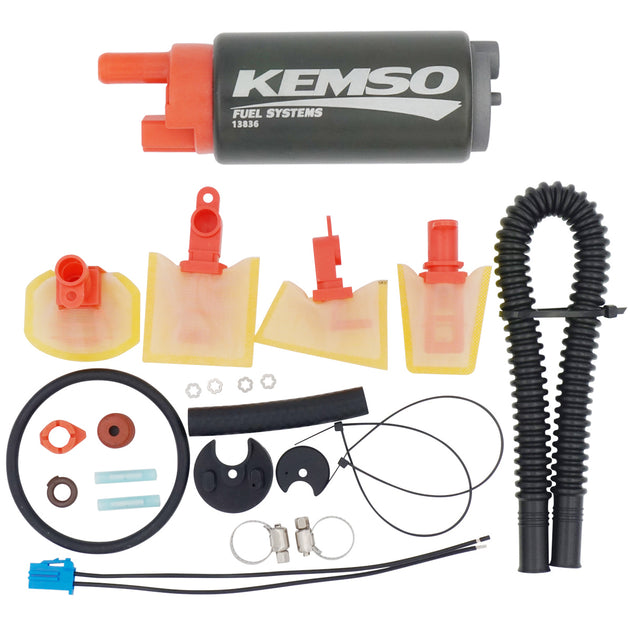
In the selection of spare parts, the physical compatibility of fuel pumps is of vital importance. The fuel tank of Yukon XL is large in size, approximately 100 to 117 liters. The built-in fuel pump assembly needs to precisely fit the shape of the fuel tank (usually saddle-shaped). The module diameter is often within the range of 140 to 160 millimeters, and the length fluctuates in the range of 300 to 350 millimeters. Replacement modules provided by mainstream suppliers such as Delphi, Bosch or Airtex for Yukon XL produced between 2015 and 2020 ensure that the error of the integrated high-precision fuel level sensor does not exceed ±3%, and the filter density meets the 10-micron filtration standard. The overall design life commitment can reach 120,000 to 150,000 miles (far exceeding the industry average median of 100,000 miles). The 2023 Consumer Reports sampling shows that third-party brands that meet OE specifications, such as the Delphi FG1689 series, have a failure rate of less than 0.8% in the first year after installation, which is much lower than the average failure rate of 5% for low-cost compatible products.
 When assessing cost and value, the original factory fuel pump parts are priced in the range of 400 to 600, while the prices of high-quality third-party certified brands are mostly between 180 and 350, which can save car owners 30% to 55% of their parts budget. However, the total cost of ownership (TCO) must be calculated: including the average labor cost for 2.5 hours of maintenance (approximately 300 at 120 per hour) and the potential risk of secondary failures. One example is the maintenance record of a municipal fleet in Arizona in 2019 for 15 Yukon XL vehicles. They used compliant Fuel pumps for preventive replacement, which extended the average service life of each vehicle by 3.2 years and reduced unplanned downtime by 85%. The return on investment (ROI) of the project reached 2.6:1. In contrast, the same year, a batch of malfunctions caused by the use of uncertified cheap Fuel pumps led to a monthly loss of over $22,000 in towing costs and revenue for a transportation company in Dallas.
The final selected fuel pump also needs to comply with the continuously evolving regulations and performance standards. The U.S. EPA Tier 3 emission regulations require vehicles to ensure that the fuel supply pressure fluctuation range is less than ±7% within an ambient temperature range of -40°C to +60° C. This became a focus during the extreme heatwave in the Gulf of Mexico in 2021, when the failure rate of substandard fuel pumps soared to 12%. Modern fuel pumps need to integrate noise suppression technology to keep the working sound pressure level below 45 dBA and be capable of withstanding the long-term corrosion of ethanol mixed fuel (E10-E15) in the fuel tank. The anti-corrosion grade of their metal components must pass the 500-hour salt spray test (in compliance with ASTM B117 standard). Referring to the fuel system durability research data jointly conducted by Ford and General Motors (sample size n=500), under harsh urban driving cycles (start-stop frequency > 50 times per hour), the voltage stability of high-quality pumps (amplitude deviation < 0.5v) determines a fault-free operation probability of at least 97%.
When assessing cost and value, the original factory fuel pump parts are priced in the range of 400 to 600, while the prices of high-quality third-party certified brands are mostly between 180 and 350, which can save car owners 30% to 55% of their parts budget. However, the total cost of ownership (TCO) must be calculated: including the average labor cost for 2.5 hours of maintenance (approximately 300 at 120 per hour) and the potential risk of secondary failures. One example is the maintenance record of a municipal fleet in Arizona in 2019 for 15 Yukon XL vehicles. They used compliant Fuel pumps for preventive replacement, which extended the average service life of each vehicle by 3.2 years and reduced unplanned downtime by 85%. The return on investment (ROI) of the project reached 2.6:1. In contrast, the same year, a batch of malfunctions caused by the use of uncertified cheap Fuel pumps led to a monthly loss of over $22,000 in towing costs and revenue for a transportation company in Dallas.
The final selected fuel pump also needs to comply with the continuously evolving regulations and performance standards. The U.S. EPA Tier 3 emission regulations require vehicles to ensure that the fuel supply pressure fluctuation range is less than ±7% within an ambient temperature range of -40°C to +60° C. This became a focus during the extreme heatwave in the Gulf of Mexico in 2021, when the failure rate of substandard fuel pumps soared to 12%. Modern fuel pumps need to integrate noise suppression technology to keep the working sound pressure level below 45 dBA and be capable of withstanding the long-term corrosion of ethanol mixed fuel (E10-E15) in the fuel tank. The anti-corrosion grade of their metal components must pass the 500-hour salt spray test (in compliance with ASTM B117 standard). Referring to the fuel system durability research data jointly conducted by Ford and General Motors (sample size n=500), under harsh urban driving cycles (start-stop frequency > 50 times per hour), the voltage stability of high-quality pumps (amplitude deviation < 0.5v) determines a fault-free operation probability of at least 97%.
When assessing cost and value, the original factory fuel pump parts are priced in the range of 400 to 600, while the prices of high-quality third-party certified brands are mostly between 180 and 350, which can save car owners 30% to 55% of their parts budget. However, the total cost of ownership (TCO) must be calculated: including the average labor cost for 2.5 hours of maintenance (approximately 300 at 120 per hour) and the potential risk of secondary failures. One example is the maintenance record of a municipal fleet in Arizona in 2019 for 15 Yukon XL vehicles. They used compliant Fuel pumps for preventive replacement, which extended the average service life of each vehicle by 3.2 years and reduced unplanned downtime by 85%. The return on investment (ROI) of the project reached 2.6:1. In contrast, the same year, a batch of malfunctions caused by the use of uncertified cheap Fuel pumps led to a monthly loss of over $22,000 in towing costs and revenue for a transportation company in Dallas.
The final selected fuel pump also needs to comply with the continuously evolving regulations and performance standards. The U.S. EPA Tier 3 emission regulations require vehicles to ensure that the fuel supply pressure fluctuation range is less than ±7% within an ambient temperature range of -40°C to +60° C. This became a focus during the extreme heatwave in the Gulf of Mexico in 2021, when the failure rate of substandard fuel pumps soared to 12%. Modern fuel pumps need to integrate noise suppression technology to keep the working sound pressure level below 45 dBA and be capable of withstanding the long-term corrosion of ethanol mixed fuel (E10-E15) in the fuel tank. The anti-corrosion grade of their metal components must pass the 500-hour salt spray test (in compliance with ASTM B117 standard). Referring to the fuel system durability research data jointly conducted by Ford and General Motors (sample size n=500), under harsh urban driving cycles (start-stop frequency > 50 times per hour), the voltage stability of high-quality pumps (amplitude deviation < 0.5v) determines a fault-free operation probability of at least 97%.